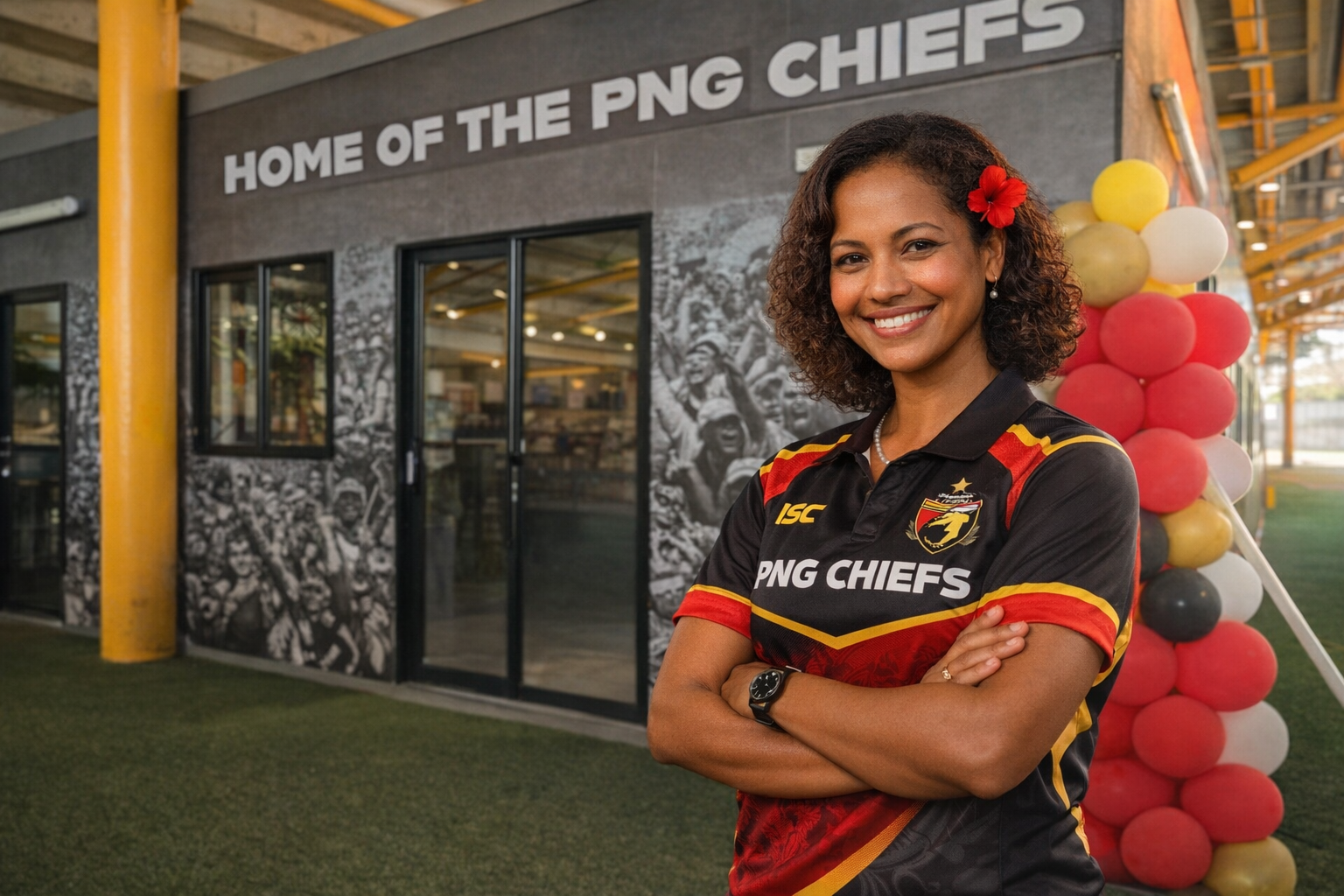
The Real NRL Challenge for PNG
PNG’s National newspaper recently ran an article titled Who Really Runs the NRL Clubs?*
It is a fair question.
If we want to understand how professional rugby league operates, we need to look beyond the team sheet and examine who owns the clubs, who funds them, and who governs them.
A glance at publicly available information — including Wikipedia’s list of NRL club owners — tells a revealing story. Some clubs are owned by leagues clubs. Some are privately held by wealthy individuals. Others are controlled by corporate entities. Several are effectively member-owned.
It is safe to say that whoever owns a club has considerable say in who runs it, and how it is run.
In short, the NRL is not just a sporting competition. It is a complex ecosystem of corporate structures, private capital, community institutions and strategic partnerships.
Who Owns the NRL Clubs?
The National article failed to address the question – who actually owns the NRL Clubs?
The ownership of NRL clubs varies significantly. Some are owned by licensed leagues clubs, some by private individuals or corporate entities, and others operate under member-based or hybrid structures.
Here is a summary of current ownership models:
| Club | Owner(s) | Estimated brand value ($AUD millions) |
| Brisbane Broncos | News Corp Australia (68.87%) BXBX Pty Ltd (9.79%) Lake Morepeth Pty Ltd (6.73%) Others (14.61%) | 124 |
| Canterbury-Bankstown Bulldogs | Bulldogs Rugby League Club Limited | 51 |
| Canberra Raiders | Canberra District Rugby League Football Club Limited | N/A |
| Cronulla-Sutherland Sharks | Cronulla Sutherland District Rugby League Football Club | N/A |
| Dolphins | Redcliffe Dolphins Rugby League Club Limited | 49 |
| Gold Coast Titans | Rebecca Frizelle & Brett Frizelle | N/A |
| Manly-Warringah Sea Eagles | Scott Penn (100%) | N/A |
| Melbourne Storm | Bart Campbell (30%) Matt Tripp (25%) Gerry Ryan (25%) Brett Ralph & Shaun Ralph (20%) | 55 |
| Newcastle Knights | Western Suburbs (N’cle) Leagues Club Limited | 43 |
| New Zealand Warriors | Autex Industries (Mark Robinson) | N/A |
| North Queensland Cowboys | Cowboys Leagues Club Limited | 72 |
| Papua New Guinea Chiefs | Australian Rugby League Commission and Australian Government | 600 |
| Parramatta Eels | Parramatta Leagues Club | 71 |
| Penrith Panthers | Panthers Leagues Club | 108 |
| Perth Bears | North Sydney Leagues Club | N/A |
| South Sydney Rabbitohs | Blackcourt League Investments Pty Ltd (Russell Crowe, James Packer, Mike Cannon-Brookes) (75%) Financial Members of the club (25%) | 73 |
| St George Illawarra Dragons | WIN Corporation (50%) St George Leagues Club (50%) | N/A |
| Sydney Roosters | Eastern Suburbs District Rugby League Football Club Limited | 68 |
| Wests Tigers | Wests Magpies Pty Ltd (90%) Balmain District Rugby League Football Club (10%) | 42 |
Source: Wikipedia https://en.wikipedia.org/wiki/List_of_NRL_club_owners
Why This Matters
What becomes immediately clear is that there is no single NRL ownership model. Some clubs are community-owned through leagues clubs. Some are driven by private capital. Others are structured as joint ventures between commercial and member-based entities.
Each structure shapes governance, accountability, financial risk, and strategic decision-making.
For PNG, entering this landscape means stepping into a competition where corporate discipline, board capability, and long-term capital management are just as important as on-field performance.
That is the real eye-opener.
The proposed PNG Chiefs model stands out.
With reported backing of $600 million from Australian government sources (ie Australian taxpayers) and the Australian Rugby League Commission, this is not a conventional club birth. It is a nation-building project wrapped in a sporting jersey.
That scale of investment creates expectations.
Recently, the Post-Courier newspaper quoted the PNG Chiefs CEO as saying:
“This is not about creating players. It is about creating professionals.”
That statement deserves careful reflection.
First Grade NRL players are already elite, high-performance professionals. They do not reach that level accidentally. The physical preparation, mental resilience, discipline and tactical intelligence required to compete in the NRL are extraordinary.
The deeper question, however, is not about whether players are professional.
It is whether the institution will be.
Professionalism in the NRL extends far beyond the 17 players who take the field. It involves governance standards, salary cap compliance, recruitment systems, medical infrastructure, high-performance science, travel logistics, player welfare, media management, commercial strategy, and long-term financial sustainability.
Week after week.
Season after season.
Under relentless scrutiny, especially from the unforgiving Australian media.
For PNG, the steepest learning curve may not be athletic — it will be administrative.
Managing an elite NRL club in a geographically isolated and logistically complex environment will present challenges no other club has faced in quite the same way. Travel burdens, player relocation decisions, commercial partnerships, and competitive parity will test the depth of institutional capacity.
The opportunity is immense.
But so is the responsibility.
If PNG Chiefs succeed, it will not simply be because of talent on the field. It will be because governance, culture, accountability and leadership align behind the scenes.
And that is where true professionalism is forged.
A closing thought
It is important to distinguish between player professionalism and institutional professionalism. NRL players are already elite professionals — their preparation, discipline, recovery, tactical intelligence and resilience are tested daily at the highest level of the sport. But institutional professionalism operates on a different plane. It involves governance standards, financial accountability, board competence, high-performance systems, compliance with league regulations, commercial strategy, player welfare frameworks and long-term sustainability planning.
One is about individual excellence; the other is about organisational capability.
Without the second, the first cannot thrive consistently.
*Who Really Runs the NRL Clubs? (The National, 12 February 2026) https://www.thenational.com.pg/who-really-runs-the-nrl-clubs

Leave a Reply